
SSP Anthony Castelle loses appeal of unlawful wounding conviction
Published:Monday | December 12, 2022 | 10:16 AM
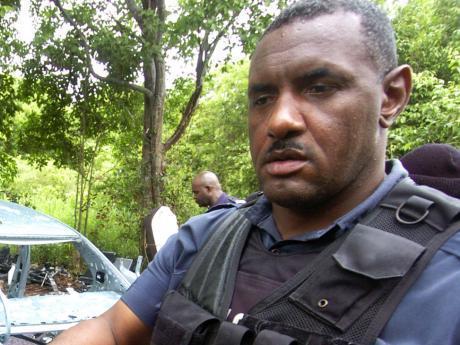
Senior Superintendent of Police Anthony Castelle has lost his appeal against his conviction in 2018 for unlawful wounding.
He was charged following a 2016 incident in St James in which shots were fired, injuring Janice Hines, who was a passenger in a taxi in which the driver had disobeyed a police signal to stop.
Castelle was fined $1 million for unlawful wounding or 30 days' imprisonment and was admonished and discharged after he was found guilty of misconduct in public office.
He joined the force in 1980 and was set to retire this year.
One of the grounds of appeal was that the Independent Commission of Investigations (INDECOM) carried out the probe as well as the arrest and charge of the appellant, and that INDECOM and it's officers had no authority to arrest and charge anyone.
Attorney-at-law Hugh Wildman, who represented Castelle, argued that the United Kingdom Privy Council, Jamaica's final court, had ruled in a previous case that under the provisions of the INDECOM Act , INDECOM did not have the power to arrest and charge anyone during the course of its investigations.
He argued that this was because INDECOM was purely an investigative body and must turn over the fruits of its investigations to the Director of Public Prosecutions to determine whether criminal charges should be preferred.
Wildman said the ruling was made by the Privy Council in the Jamaican case of the Commissioner of INDECOM and the Police Federation and others.
Wildman asked the Court of Appeal to find that Castelle's trial was a nullity.
The Crown conceded that INDECOM and its officers did not have the legal authority to lay charges against Castelle. However, prosecutors Janek Forbes, Ashtelle Steele and Sharelle Smith argued that the trial could only be considered a nullity where no order of indictment was granted or signed by the Parish Judge, which was not the situation in Castelle's case.
“It is common ground between the parties that the INDECOM case has decided with finality that INDECOM does not have the power to prosecute an offence, which had been the subject of an investigation by INDECOM, referred to as an incident offence,” the court said.
The court, in handing down its decision last week Friday, said the paramount issue in the case was whether the parish court judge had jurisdiction to make and endorse the order for trial of the appellant on an indictment, in circumstances where the information on which the appellant had been brought before the court was not properly laid.
It was the court's finding that “ the commencement of proceedings by the INDECOM officer had no continuing significance after the parish judge signed the order for indictment.”
“Accordingly, we conclude that the nature of the breach was not such as to render the trial a nullity and that defect in the originating process was cured by the Parish Court Judge granting an order of indictment for the trial of the appellant to proceed and the subsequent proffering of the indictment by the clerk of the courts. The trial of the appellant, which ensued following these procedures, would not have been tainted by the initial procedural breaches of INDECOM,” the court comprising Justice Marva McDonald-Bishop, Justice Marcia Dunbar-Green and Justice Kissock Laing (acting) ruled.
Wildman had also argued that there was inadequate evidence to support the convictions and the no case submission should have been upheld by the parish judge, but the court said it did not find that to be so.
The court said of significance was the fact that there was evidence that the appellant was the only person known to have discharged his firearm, a fact he admitted.
The court said there was sufficient evidence of multiple projectile strikes to the motor car and bullet fragments found inside. Reference was made by the court to the findings of the government's ballistics expert that a fragment of a metal jacket from a fired bullet was discharged from the barrel of a firearm of a similar class to the firearm which the appellant had discharged on the day of the incident.
The court said that although Castelle asserted in his unsworn statement that he fired warning shots in the air, it was open to then parish judge Natalie Hart-Hines to have found that he, at least, recklessly discharged his firearm and to infer that Hines was injured by a bullet that had been discharged from Castelle's firearm.
“Having found that the appellant was guilty of unlawful wounding, the learned Parish Court Judge was entitled to also find on that evidence, as she did, that by discharging his firearm five times, when, as he admitted in his unsworn statement, the thoroughfare was busy with pedestrians and motorists, he had committed the offence of misconduct in public office,” the court ruled.
Castelle's convictions stemmed from an incident on January 22, 2016 in which taxi driver Lenford Grant, who was driving in Montego Bay with six passengers, was signalled by the police to stop.
The driver disobeyed and was chased by Castelle and a district constable in an unmarked service vehicle with siren blaring and bright flashing lights.
During the chase, shots were fired and Hines, a pregnant woman, who was sitting in the back of the taxi, was hit.
INDECOM had issued statements at the time of the incident reminding the police of section 103 of the Force Orders that firearms should not be discharged at a vehicle simply because it has failed to stop or to immobilise the vehicle.
In addition, motorists were warned by INDECOM to obey the lawful commands of police personnel engaged in enforcement duties.
-Barbara Gayle.
Follow The Gleaner on Twitter and Instagram @JamaicaGleaner and on Facebook @GleanerJamaica. Send us a message on WhatsApp at 1-876-499-0169 or email us at onlinefeedback@gleanerjm.com or editors@gleanerjm.com.