
Hurricane losses still bite Clarendon farmers
Published:Tuesday | April 28, 2026 | 12:07 AMOlivia Brown/Gleaner Writer
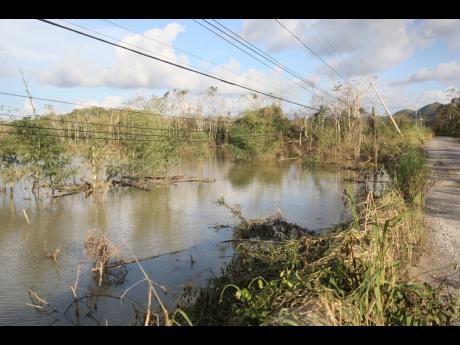

Six months after Hurricane Melissa sowed devastation across sections of Jamaica, leaving flooded fields, shattered infrastructure and livelihoods in ruins, farmers in Clarendon are still reaping the bitter aftermath. Some have begun rebuilding, while others continue to struggle under the weight of severe financial losses and inadequate support.
President of the Clarendon branch of the Jamaica Agricultural Society (JAS), Andre Anderson, told The Gleaner that while most farmers have resumed some level of production, the effects of the hurricane are still being felt across the parish.
“The majority of the farmers are recovering. Some recovered their production, but are still struggling with the fallout that resulted from the effects of the hurricane. Very few have decided to give up altogether,” Anderson said.
He noted, however, that the level of assistance received by farmers in Clarendon has been limited, as the parish was not classified among the areas prioritised for support following the storm.
Anderson told The Gleaner that Clarendon “wasn’t deemed to be one of the six priority parishes” and, as a result, did not receive significant support. He further explained that the long-standing issue of farmer registration also affected access to relief, with some cultivators reportedly denied assistance because they were not registered with the Rural Agricultural Development Authority (RADA) – a concern the entity has committed to addressing.
According to Anderson, while the support channelled through the JAS was appreciated, it fell short of what was needed given the scale of the losses and the expectations of farmers and branch members.
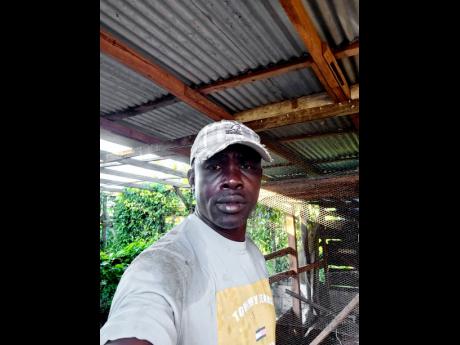
Meanwhile, farmer and president of the Bog Hole branch of the JAS, Leroy Reid, said the recovery process has been far more challenging than he had anticipated.
The farming community of Bog Hole in northern Clarendon was among the hardest hit by the Category-5 system, which left farms inundated and many communities marooned.
Reid, who has been farming since 2012 and is involved in poultry and crop production, told The Gleaner that six months after the hurricane he has only been able to partially restore his operations.
The Ministry of Agriculture, Fisheries and Mining reported the loss of roughly 1.25 million animals, including poultry, cattle and small ruminants.
Those figures mirror the struggles being faced by farmers in Clarendon, including Reid, who told The Gleaner that his losses have climbed to $1.1 million as he continues to rebuild his crop and poultry operations. The damages, Reid said, include the loss of equipment, livestock and infrastructure.
“Six months post Hurricane Melissa, I have only managed to grow two sets of cash crop – pak-choi and lettuce. I am reaping some of the pak-choi now. However, due to a glut on the market, the first crop of pak-choi and lettuce, I incurred a loss,” he said.
He added that he is still facing major setbacks in his livestock operations.
“I am still even struggling to cut drains [due to debris and fallen trees]. I haven’t bounced back in my livestock production yet. The roof of the poultry house is still off, but I am doing some subsistence poultry,” Reid said.
Before the hurricane, Reid said his farming business had been thriving, particularly in poultry production.
“My business was a lucrative one. I had 50 layers until Hurricane Mellissa kill them leaving only seven birds. My broiler house was one hundred square feet capacity. Between the layer and broiler production I had six markets supplying,” he said.
According to data from the Ministry of Agriculture, the poultry industry was among the hardest hit, with an estimated 458,000 layers and 780,000 broilers lost, accounting for approximately $2 billion in damages.
Six months later, Reid is still unable to serve his poultry customers. Despite this, he observed that demand for produce remains high.
“Based on my observation demand is greater than supply, therefore, the cost of the produce greater,” he said.
Asked what continues to hinder his recovery, Reid pointed squarely to financial constraints. “The lack of money,” he put simply.
So far, the direct support he has received has been limited.
“I got a total of three bags of fertiliser to get back into crop production,” he said. Reflecting on the past six months, Reid admitted that the road back has been emotionally and financially draining.
“Not even in my rarest dream I thought this recover would be so hard,” he said.
Still, he remains hopeful.
Looking ahead, Reid said assistance with rebuilding materials would make the greatest difference. “I would be most grateful for some construction materials. When everything fails, agriculture and education is what remain.”
The ministry has estimated losses to the sector at approximately $29.5 billion, with some 41,390 hectares of farmland affected and more than 70,000 farmers impacted.