
Pesticide clean-up - FAO to finance regional disposal project
Published:Sunday | August 8, 2010 | 12:00 AM
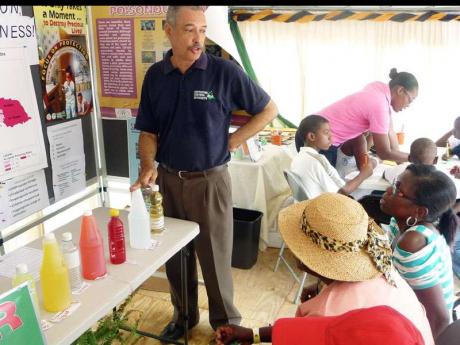
Christopher Serju, Gleaner Writer
The Food and Agricultural Organisation (FAO) of the United Nations has committed to funding a regional mega clean-up project aimed at removing all obsolete pesticides from the shores of Caribbean Community (CARICOM) territories.
In Jamaica, the Pesticides Control Authority (PCA) will be the lead agency, Registrar Michael Ramsay told The Gleaner during the recent Denbigh Agricultural and Industrial Show.
"It's going to be in several phases. The first phase will be training some people to take the inventory. We are going to be doing the inventory and then we will be moving the stock to a centralised place, where they will be properly packaged to international standards, and then shipped out of the country for disposal at the cost of the FAO," he explained.
Internationally, obsolete pesticides are those which have expired. But this project will include any pesticide that is unwanted. If people want to get rid of these, they can call the PCA.
The authority will soon be contacting all farms, all agencies and all companies which import and/or distribute pesticides to find out whether they have stocks they want to get rid of.
Another major area of concern is customs.
"We will shortly be sending out letters and we will be doing advertising to ask them to send in in writing or to contact us by phone or by facsimile, saying that they have pesticides, and what it is, and then we will eventually come out and see what it is, and make a proper inventory. We have not worked out the logistics yet in terms of transportation. It will depend on the quantity that is there and where it is located and the hazardous nature of the material," said Ramsay.
He made it clear that while the PCA would be happy to help people and institutions get rid of any unwanted pesticides, it would not be buying these chemicals from them but instead, would be offering its help in safely disposing of them.
"No, we don't," he replied when asked if the PCA had any idea about the volume of unwanted pesticides that might be scattered across the country. He would not even venture a guess. "I don't think anybody does."
Unwanted pesticides
A major area of concern in that regard is the amount of unwanted pesticides accumulated by the Customs Department from the various ports of entry across the island. While there is no way of knowing the total volume, it is expected to be significant.
Ramsay explained how the build-up has taken place over the years.
"People try to bring in pesticides that are not registered, or that they don't have a licence to bring in that particular pesticide and then they just do so, and they are not going to be able to get through with the process. Customs has a real problem, not only pesticides, but with other hazardous chemicals, but we will only be able to deal with the pesticides part."
The PCA registrar does not know how much money the FAO will be spending on the project, but gave the assurance that it had committed to getting rid of all the pesticides in CARICOM countries.
"The inventory will be completed by the end of the year, and next year will do the collecting and packaging and disposal, but we don't know what is their time frame for next year. It will depend, of course, on what quantities, and again, where they are scattered around the country."