
Extreme weather created havoc, Claimed 13 lives
Published:Sunday | December 26, 2010 | 12:00 AM

Laura Redpath, Senior Gleaner Writer
IT WAS 12 days into the new year, a 7.0 earthquake rocked Haiti's capital, Port-au-Prince, and Jamaicans felt it. That same week, multiple earthquakes were detected by the United States Geological Survey and they were taking place around Jamaica, mainly in the Hispaniola and Puerto Rico regions.
Although Jamaica has been spared of an earth-shattering disaster, extreme weather conditions from drought to flooding, put the National Water Commission under pressure this year.
The dry spell which plagued Jamaica earlier this year, had been affecting the island since June 2009. Many paying customers would not see water in their taps for up to a week and sometimes longer, forcing residents in various communities across the island to 'catch' water and use it sparingly.
Eastern Westmoreland Member of Parliament Luther Buchanan called for the Jamaican Government to use cloud-seeding so as to get rainfall going. However, Evan Thompson, head of the Meteorological Service's weather branch warned against this, noting that it would be a waste of resources and that the Met Office recorded that rainfall was "above average" by the end of December in 2009.
But by June 2010, the NWC recorded a dip in revenue as it collected anywhere between $100 million and $200 million less than what it was used to each month, due to the lack of water.
However, the drought didn't stop new farmers from entering agriculture and more experienced ones from expanding, as the sector recorded an increase in acreage.
Deep dip
Then the scale took a deep dip in the other direction and this year's hurricane season brought a wave of familiar destruction and rehashing of the usual topics: 'no-build' zone enforcement, the effectiveness of the Met Service, and mitigation.
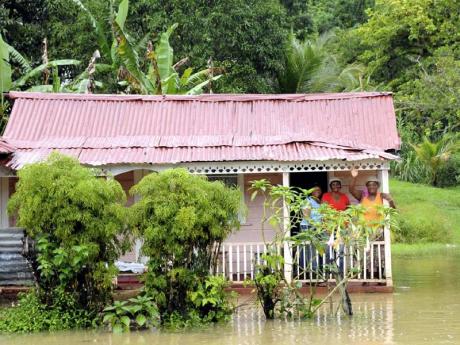
Tropical Depression 16, which upgraded to Tropical Storm Nicole as it passed Jamaica at the end of September, left Jamaica with a repair bill of more than $10 billion, more than 150 homes damaged, and over 200 communities surrounded by water.
Thirteen people were killed and two are still missing, including 11-year-old Brandy Boyd, whose parents and three siblings were laid to rest after their home was washed off the gully bank in Sandy Park, St Andrew.
Despite mitigation efforts by the National Works Agency, heavy rainfall left roadways in Manchester, St Thomas and Portland blocked, due to breakaways and landslides; and various rural communities such as New Market in St Elizabeth were inundated. New Haven residents in St Andrew decided to take mitigation efforts into their own hands and cleared the drains running through their community with shovels.
Just over a month later, indecisive Tomas moved back and forth between hurricane and tropical storm status, even going as far as downgrading to a depression as it moved into Jamaica's waters. The Government scheduled a meeting with emergency response and relief agencies.
The Met Service reported that Tomas was expected to affect Jamaica as it made its way towards Haiti.
Despite their preparations, buying seemingly endless supplies of tin food, batteries and everything else needed for storm preparation, many Jamaicans were left wondering if the storm actually arrived and if it did, when did it move on?
Infrastructure improvement
Meanwhile, improvement to the island's infrastructure is underway. The $36 billion Jamaica Development Infrastructure Programme is ongoing, and is intended to restore major and parish council roads, while facilitating maintenance.
Despite the damage caused at the end of September, the programme continued, as Minister of Transport and Works said, "with adjustments being made to reflect the new emergencies as we go along".
As for the NWC, spokesman Charles Buchanan said this summer that projects were in place to improve the water and storage supply systems over a 24-month period.
The projects include the US$85 million Kingston metropolitan area water supply project, under which second-phase projects have been completed in Greater Spanish Town. The US$211-million Jamaica water supply improvement project is also under way, of which the Rio Cobre pipeline and the Constant Spring water treatment plant are just two major areas being addressed. Last, but not least, the US$40-million Kingston water and sanitation project is also being taken on by the NWC.