
Montserrat made big progress after eruption - IMF
Published:Friday | December 16, 2011 | 12:00 AM
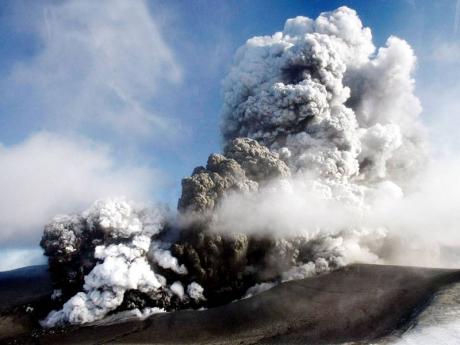
The International Monetary Fund (IMF) says Montserrat has made "enormous progress" in its recovery from the 1995 eruption of a long-dormant volcano, which remains intermittently active.
After concluding its first-ever consultation discussions with the British Overseas Territory, the Washington-based financial institution said that the island's economy is sustained largely by grants from the United Kingdom (UK).
It said low growth is expected in 2011 after sharp output contractions in 2009-10, adding that stress in the financial sector and slower-than-expected development of the major capital investment projects continue to limit prospects for growth.
"The island has made enormous progress in its recovery, with generous support from the UK government, the European Union, and other donors," the IMF said, adding "nevertheless, the eruption has had a large and lasting demographic, economic and social impact".
It said grants from the UK finance around half of expenditure, stating that the ability to mobilise revenue domestically is constrained by the dominant role of government and donor activity, which is not taxable.
The IMF said UK grants buffered the impact of the global crisis on Montserrat, noting that the economy contracted in 2009-10 "due in part to a small volcanic eruption and the passage of Hurricane Earl in 2010".
The Washington-based financial institution said inflation remained low at around 2.5 per cent in 2009-10, adding that although UK grants sustained expenditure in 2009, the fiscal stance in 2010 was "contractionary."
"The fiscal stance and weak activity reflect, in part, implementation delays in key capital projects. The economic outlook hinges upon progress with major public capital projects, improving access to the island, and strengthening the private sector."
But while the IMF welcomed Montserrat's "significant progress" in recovering from the eruption of the volcano, it also noted that "in many respects, the island's economy is still out of equilibrium, as it adapts to living with the volcano while exploiting related opportunities".
The financial institution said it supports the authorities in their efforts with support from the UK to gradually reduce dependence on external grants, welcoming the development of a strategy for addressing financial vulnerabilities and the initial progress in implementing it.
It is supporting "pre-emptive action to minimise costs and risks and preparation of an action plan spelling out the roles of the key players," urging the authorities to further improve regulation and supervision of the non-bank financial sector and bringing the building society under the purview of the Financial Services Commission.
The IMF agreed that reducing dependence on recurrent and capital grants should be a key objective of fiscal policy, and urged the government to reach agreement with the UK on a revised fiscal framework and timetable for reforms "in light of implementation delays in key projects and the current economic environment".
- CMC