
Divergent reckoning in response to Stanford Clico crisis
Published:Sunday | March 11, 2012 | 12:00 AM
Wilberne Persaud, COLUMNIST
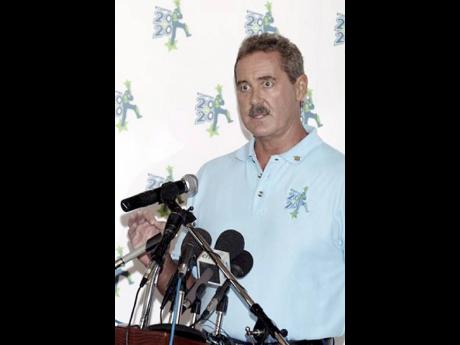
Datelined Houston, March 6, the New York Times reported that Texas financier R. Allen Stanford was convicted on 13 out of 14 counts of fraud.
"The jury decision followed a six-week trial and came three years after Mr Stanford was accused of defrauding nearly 30,000 investors in 113 countries in a Ponzi scheme involving US$7 billion in fraudulent high-interest certificates of deposit at the Stanford International Bank, which was based on the Caribbean island of Antigua," the report said.
Resolution of the case took so long because Stanford, while in custody "was severely beaten in a 2010 brawl with another federal inmate then became addicted to prescription anti-stress drugs. He underwent a year of therapy before Judge David Hittner of United States District Court ruled that he was fit to stand trial. The defence said he could not properly defend himself because he had lost much of his memory".
Were it not for this setback, the matter would have been resolved earlier.
Here in the Caribbean, our systems work a bit slower.
In Barbados, public acknowledgement of CLICO International Life (CIL) solvency hazard occurred in January 2009 when the statutory fund was said to be Bds$300m in deficit and the company's assets insufficient to make good its obligations to policyholders and investors.
Three years later — February-March 2012 — the Barbados Nation Newspaper reports: "Minister of Finance Chris Sinckler is saying nothing about a 39-page audit report by forensic auditors Deloitte Canada into CLICO International Life — at least until he receives a full, official report from the judicial managers."
When we compare official responses to the September 2008 meltdown on Wall Street with that of Jamaica in mid-1996, Stanford's Ponzi scheme in Antigua, collapse of CL Financial in Trinidad and Tobago and its affiliate CLICO in Barbados, we find stark contrasts.
What accounts for such different responses and outcomes? Let's start in the major league. Once the Federal government denied Lehman Brothers support and private capital proved unwilling, systemic collapse became a distinct possibility. Indeed, US Treasury Secretary Paulson never thought the market's response would be so extreme. Imprudent sub-prime lending coupled with bundling of dicey mortgages into collateralised debt obligations, derivatives, credit default swaps and entirely unwise extreme leveraging, made it impossible for the majors in the world's financial industry to trust each other, to accept each other's formerly bona fide obligations — indeed, the world's financial industry would not trust itself!
We faced global systemic collapse and a recession to dwarf the crash and great depression of 1929. Leaving aside morality and equity, action was disjointed sending mixed signals and not comprehensive enough.
The malaise allowed no dilly dallying — a fix had to be and was ultimately arranged. The second stage of the response, however, is what definitively separates that of the US from the Caribbean. A Financial Crisis Inquiry Commission was created to "examine the causes of the current financial and economic crisis in the United States".
This commission was established in May 2009 and its report published by January 2011. The contrast is so stark it's best to simply quote from the published material.
"The commission conducted research into broad and sometimes arcane subjects, such as mortgage lending and securitisation, derivatives, corporate governance, and risk management. To bring these subjects out of the realm of the abstract, it conducted case-study investigations of specific financial firms—and in many cases specific facets of these institutions—that played pivotal roles. Those institutions included American International Group, Bear Stearns, Citigroup, Countrywide Financial, Fannie Mae, Goldman Sachs, Lehman Brothers, Merrill Lynch, Moody's, and Wachovia. The commission also looked more generally at the roles and actions of scores of other companies. The commission also studied relevant policies put in place by successive Congresses and administrations. It also examined the roles of policymakers and regulators, including at the Federal Deposit Insurance Corporation, the Federal Reserve, the Federal Reserve Bank of New York, the Department of Housing and Urban Development, the Office of the Comptroller of the Currency, the Office of Federal Housing Enterprise Oversight (and its successor, the Federal Housing Finance Agency), the Office of Thrift Supervision, the Securities and Exchange Commission, and the Treasury Department."
In Jamaica, the crisis publicly unfolded in June 1996. A resolution company was created in January 1997 and the matter cauterised.
Panic and systemic collapse was avoided. A costly commission of enquiry came more than a decade later with the appearance more of a politically motivated device seeking not causes but political blame.
No report has as yet been published. In Jamaica, too, elections occurred during the resolution period and the political parties agreed not to make the financial crisis part of the political debate.
For Barbados, this was/is not the case. Last Sunday, the opposition Barbados Labour Party, in what appears to be its first salvo, made the CLICO crisis the centrepiece of its discourse because it seems the matter is of such concern to so many citizens, yet seems shrouded in secrecy.
Trinidad and Tobago has yet another response. There is a commission of enquiry. It is ongoing and materials are published on the web for all to review.
This commission, however, resembles more the commissions we know from our colonial days. Its staff comes nowhere near the more than 87 complement that served the US Commission. The commissioner is overburdened and the likelyhood of as comprehensive a result is questionable.
But we do need a comprehensive review of our failure. If the region wants to be known as a successful financial services provider of global reach and respect this seems a requirement. Perhaps CARICOM should be the one to sponsor such a review.
Wilberne Persaud is author of 'Jamaica Meltdown: Indigenous Financial Sector Crash 1996'. Email wilbe65@yahoo.com.