
Earth Today | ‘Justice for the deserving’
Small island states press in for reduced emissions, promised financing to solve climate woes
Published:Thursday | June 26, 2025 | 12:06 AM
SMALL ISLAND states are insisting on the delivery of “justice for the most deserving”, through attention to reducing greenhouse gas emissions and right-sizing the needed financing to stave off the worse impacts of a changing climate.
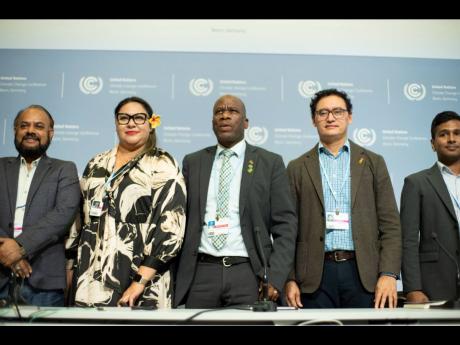
This latest call came on Tuesday (June 24) from Bonn, Germany where the Alliance of Small Island States (AOSIS) joined Least Developed Countries (LDCs) at a press conference to flag stalled talks in key areas at the United Nations 62nd Meeting of the Subsidiary Bodies, also known as the Bonn Climate Change Conference.
“The discussions here in Bonn must be urgently progressed. Climate change and its devastating impacts are accelerating, why are we not acting at least apace?” observed Anne Rasmussen, lead climate negotiator for AOSIS, the UN negotiating bloc for small island developing states.
“On the Mitigation Work Programme, parties must find a way to work together and ensure we accelerate our efforts to limit the costs of adaptation, keep the full range of adaptation options on the table, and limit loss and damage,” she added.
Mitigation is concerned with limiting the emissions of greenhouse gases, including carbon dioxide that fuel the warming of the planet and trigger the climate impacts that are being felt, including extreme hurricane and drought events, as well as sea level rise and the associated coastal erosion and risk of compromised freshwater resources – to which Caribbean small island developing states are especially vulnerable.
DESPAIR
“It is so easy to succumb to the distraction and despair of the international military conflicts which are highlighted in the headlines. However, it is imperative that we amplify to the world how very real this climate crisis is. We are falling further and further behind, and if countries do not act with real ambition to achieve the pledges they made when we all committed to the Paris Agreement 10 years ago, we will be truly lost,” Rasmussen said.
“We are here at Bonn not to engage in a rudimentary exercise in negotiating text, but to enact a critical defence of lives and uphold the right of our countries to thrive,” she added.
“Our world has not yet crossed the Paris Agreement 1.5-degree Celsius limit which refers to a 20-year average, but the most recent scientific reports underscore we are in a far worse danger zone than we previously thought. AOSIS calls on all countries to ensure we do not fail in our mission and destroy our citizens’ hopes of a sustainable future,” she said further.
Caribbean SIDS have long signalled the devastation – from lost lives to derailed livelihoods – that will arise should the world fail to realise the promise of the Paris Agreement which commits countries to “holding the increase in the global average temperature to well below two degrees Celsius above pre-industrial levels and pursuing efforts to limit the temperature increase to 1.5 degrees Celsius above pre-industrial levels, recognising that this would significantly reduce the risks and impacts of climate change”.
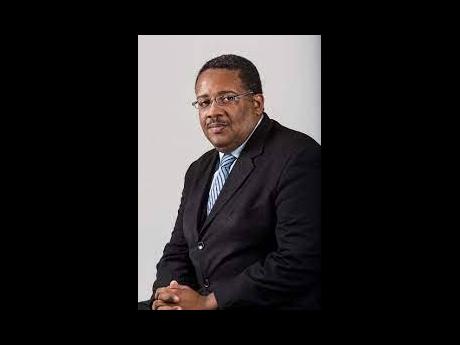
Jamaican and Caribbean scientist, Professor Michael Taylor, for one, has long sounded the alarm.
1.5 REPORT
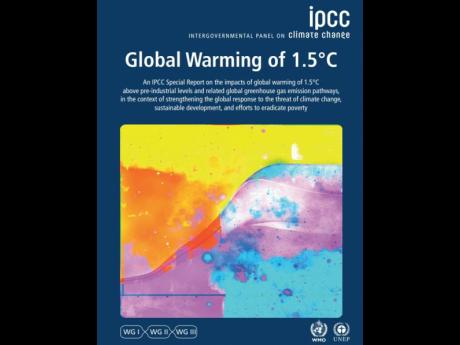
“This report is unambiguous in its findings that vulnerable countries will not be able to adapt to warming beyond the 1.5 degrees Celsius limit. It does not place two degrees Celsius on the table as an alternative or compromise option,” Taylor told The Gleaner in 2022, citing the findings from the Intergovernmental Panel on Climate Change’s special report on 1.5 degrees Celsius of global warming for which he is a co-author.
“Rather, in no uncertain terms, it states that time is of the essence, as the window to secure a liveable and sustainable future, which its unambiguous links to achieving the 1.5-degree target, is rapidly closing,” he added.
A physicist and highly regarded climate scientist with many research papers to his name, Taylor, is also dean of the Faculty of Science and Technology at the University of the West Indies, Mona.
Now three years on, Rasmussen is herself raising the red flag.
“Around the world, the ‘unprecedented’ has become our new norm. The economies of small island states are stymied by disasters we did not cause. Not even a year ago, the Caribbean was ravaged by Hurricane Beryl, the earliest Category 5 hurricane in the Atlantic ever recorded. The mass destruction it brought was a battering to economic sustainability, costing hundreds of millions in damages. The Pacific is experiencing record sea-surface temperatures, with marine heatwaves affecting over 10 per cent of the global ocean,” she explained.
“In this pivotal year for enhanced NDCs [nationally determined contributions] submission and the 10th anniversary of the Paris Agreement, let us prove that multilateralism does indeed work, and that we can deliver on the promise of this process to deliver justice for the most deserving,” Rasmussen encouraged.
NDCs are planned-for individual country contributions to reducing greenhouse gas emissions.