
Budget Debate recap
Digging into Government, Opposition responses to local, global crises
Published:Sunday | March 22, 2026 | 12:10 AM
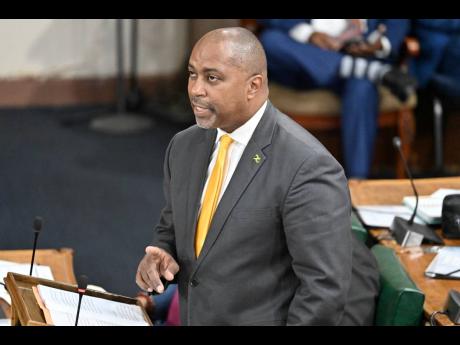
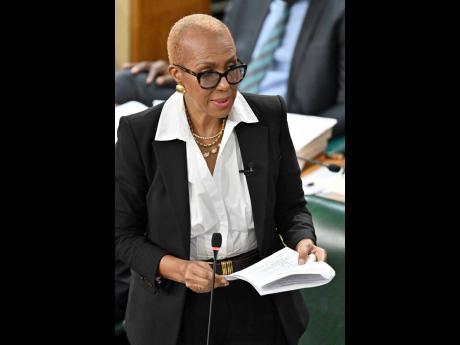


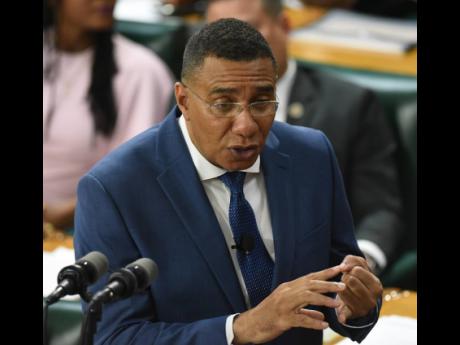
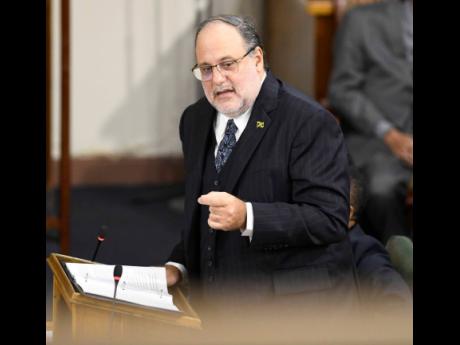
The 2026-2027 Budget Debate comes to an end on Tuesday with Finance and the Public Service Minister Fayval Williams expected to respond to the Opposition’s alternative to the administration’s $29.4-billion in new and renewed revenue measures.
The parliamentary Opposition says its proposals would spare taxpayers the burden of digging into their pockets to fund $18 billion in new taxes and also avert the continued extraction of $11.4 billion from the National Housing Trust (NHT).
Reviewing aspects of the Budget Debate so far, economist Keenan Falconer said one of the key highlights of the annual parliamentary exercise was the prime minister’s tabling of legislation to establish the National Reconstruction and Resilience Authority (NaRRA).
With the suite of multilateral financing available for reconstruction over the next three years, Falconer said the plans for infrastructure development must be matched by sufficient institutional and procedural capacity and Jamaica’s growth prospects and recovery efforts would depend heavily on the speed with which these projects could be completed.
At the same time, Oniel Grant, industrial relations specialist and former president of the Jamaica Civil Service Association, said that, as with all budgets, discipline in the execution of the underlying plans will be critical in determining policy success or failure.
He said both sides of the parliamentary divide delivered their key points, but the Government had more policy cohesion than the Opposition which realistically ought to be expected.
Falconer said the finance minister’s announcement of various financial sector reforms, including the gradual loosening of investment restrictions on pension and insurance funds was also a key item as it will help to mobilise domestic capital during the recovery effort, which was otherwise trapped in lower-return instruments. He said these must be coupled with the crowding in of private investment from the suite of multilateral financing to accelerate recovery.
Turning to the Opposition’s proposal for the development of a digital invoicing system and wider reforms for enhancing overall tax compliance, Falconer said these were noteworthy and deserve due consideration as more robust and accurate tax revenue collection will strengthen fiscal planning and forecasting, particularly at this time when revenues have been severely affected.
The economist noted that the wage bill would require prudent management and coordination among all stakeholders, especially over this period as it represents the largest single item in the Budget.
“Elevated wages as a percentage of tax revenues and GDP (gross domestic product) continue to pose a fiscal risk and could reduce fiscal flexibility at a time when we continue to face significant shocks which require greater room for manoeuvre,” said Falconer.
In an overview of the Budget presentations, Grant said the theme centred on issues of growth, relief and recovery, stability and resilience in the post-Melissa era and, given the high degree of instability and uncertainty in the global political economy for the foreseeable future. This is in the context that different crises have shaped Jamaica’s policy response over many decades.
He is of the view that the four speakers – Williams, Julian Robinson, opposition spokesman on finance; Mark Golding, the opposition leader and Prime Minister Dr Andrew Holness – focused on thematic issues with points of divergence and convergence.
The most obvious contrast or divergence, according to Grant, was around taxation where Williams introduced a range of measures to increase tax collection, a move with which Robinson dissented. The opposition spokesman suggested that the minister should instead focus on the electronic invoice system and explore how to bring evaders into the taxpayer pool.
Grant reasoned that both Williams and Robinson agree that the scale of the hurricane disaster, the state of tax compliance and the need to maintain the Net International Reserves as a financial buffer are foremost in dealing with Jamaica’s current crises.
The industrial relations specialist said there was divergence in views on how to balance the need for a liveable wage with the constraints of a post-Melissa recovery, while taking into account the unfolding impact of the war in the Middle East.
Noting that the Government reduced its promised increase in the minimum wage from $18,500 to $17,000 per week, Grant said: “I am surprised that the Government still went ahead with it this year. While workers will be disappointed that the full promise was not kept, I believe this reduction is necessary given the current environment.”
The Opposition has called out the prime minister on the reduction, but did not offer any concrete suggestions.
Grant argued that the challenge middle-class workers will face is how to finance this increase in the minimum wage, given inflation and a projection for low wage increases for them.
“Public sector negotiations usually set the tone and the private sector has been looking on with interest as they too have been impacted by what is happening locally, regionally and internationally.”
The Opposition has proposed an acceleration of the adjustment to the income tax threshold along with the acceleration of the digital invoice system to account for this adjustment.
“These are steps in the right direction as I support a move to consumption taxes and fees and less reliance on income taxes as a source of Government revenue,” he opined.
“It is my position that the tax threshold target should have been $3 million to reduce the burden on the working middle class and to deepen our policy work towards consumption, luxury and vice (sugar, cigarette, alcohol),” he added.
For the prime minister and opposition leader, Grant said the philosophical divide was between Holness’ focus on long-term structural resilience and large-scale capital projects through the NaRRA, and Golding standing firm on the need to focus on immediate social protection and reducing the tax burden given that the Government has been inefficient in utilising its capital budget.
The Opposition has argued that the allocation of $10 billion for the Restoration of Owner and Occupant Family Shelter (ROOFS) programme is insufficient and that there are access issues due to lack of land tenure by the most vulnerable families in the affected areas.
“Again, we see where there was strong divergence on taxes with the prime minister defending $18 billion in new taxes while Golding argued that we should not be taxing our way out of a disaster,” Grant noted.
Grant said the drawdown of $11.4 billion from the NHT has become a perennial issue of divergence between the Government and the Opposition with the former defending the withdrawal while the latter continues to decry the move, arguing that there was no correlation or alignment to the Trust’s mandate of building houses for the workers of the country.
On infrastructure development and the use of capital expenditure to drive economic growth, there was shared concern by the Opposition and Government about the need to remove bureaucratic bottlenecks.
However, the Government was pushing for more allocation and spending on projects while the Opposition was calling for greater efficiency in the execution of projects and not necessarily allocating more.
While there have been more innovative Budget debates in the past, Grant said this year’s instalment reflected a fair amount of convergence around the thematic and cross-cutting issues affecting the country with divergence being mainly around the “how” and “why”, not necessarily the “what”.